
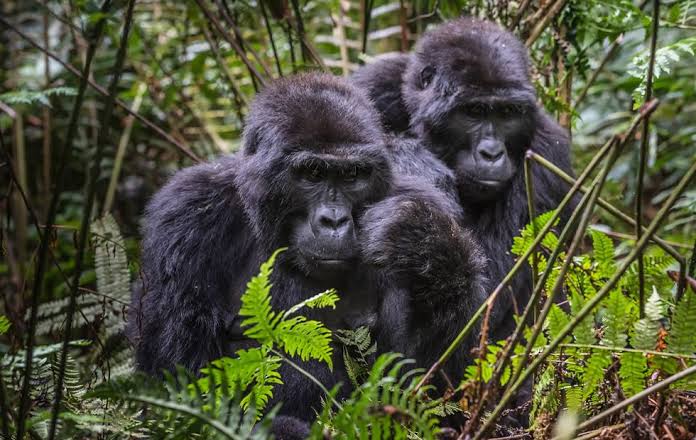

- 30 Views
- 14 Min Read
- (1) Comment
There is a moment on every gorilla trek that nobody can brief you for. You have been sliding down a wet slope for two hours, your boots are caked in red mud, and a tracker ahead of you holds up a hand. The forest goes quiet. Then a branch moves, and a silverback the size of a small car looks at you with an expression that is oddly familiar. Calm. Unbothered. Maybe a little curious about what you are doing in his living room.
That is gorilla trekking in Uganda. It is part hike, part pilgrimage, and part lesson in humility. It is also one of the few wildlife experiences on earth where the planning matters as much as the day itself, because permits are limited, prices shift, and the wrong sector can turn a good trip into a sore one.
This guide walks you through all of it: what the permit costs in 2026, how to book it, which part of the forest suits your legs, and what the hour with the gorillas actually looks like. We are a Kampala-based team, so we have seen what trips go right and what trips go sideways. Here is the honest version.
Why Uganda Is the Smart Place to See Mountain Gorillas
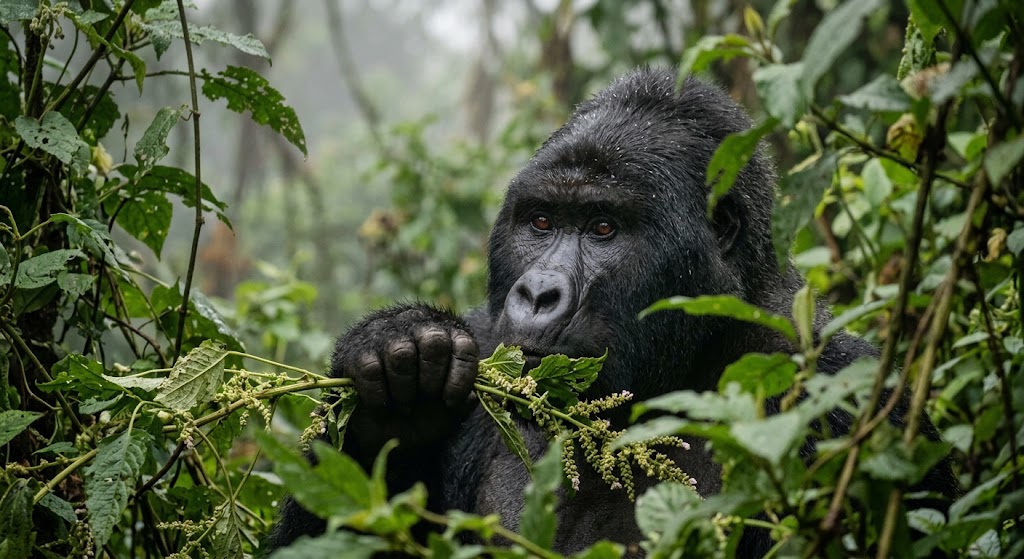
Mountain gorillas live in only three countries: Uganda, Rwanda and the Democratic Republic of Congo. The global population is around 1,063, which makes every permit fee feel less like a ticket and more like a donation to a very high-stakes rescue effort.
Uganda holds a big share of those animals. Bwindi Impenetrable National Park and Mgahinga Gorilla National Park are the two places in the country where you can trek them. The numbers in Bwindi are one of conservation’s better stories: the population there and in the neighbouring Sarambwe Reserve has climbed from about 400 to 459. Part of the credit goes to tourism money that pays for rangers, anti-poaching patrols and community projects around the park.
Bwindi is also a UNESCO World Heritage Site, and one look at the ridges explains why. The forest is ancient, steep and layered, a place where mist sits in the valleys until mid-morning.
There is a practical reason to choose Uganda too. Rwanda charges US$1,500 for a standard gorilla permit, nearly double the Ugandan peak-season rate. You get the same one hour, the same animals, and a lot of change left over for a good lodge.
If you want to see how a Uganda gorilla trip can fit together with other parks, our team at Nitah Tours and Travel builds itineraries from Kampala every week.
Gorilla Permits in Uganda: What They Cost in 2026
The permit is the single biggest line in your budget, so let us start there.
Permits are issued by the Uganda Wildlife Authority (UWA). Under the tariff UWA announced in February 2026, the standard gorilla trekking permit costs US$800 for foreign non-residents in the high season, and US$600 in the new low-season months of April, May and November. Foreign residents, visitors from the rest of Africa and East African citizens pay lower rates.
A word of caution. Permit pricing has been a mess of conflicting numbers online. Some blogs still quote older figures, a few quote higher ones, and several travel sites point out that tariff documents covered different periods. Treat any price you read, including ours, as a starting point and confirm the rate for your exact trek date before you pay. That one email can save you from an unpleasant surprise.
What the permit covers
Your permit pays for park entry, a guided trek with armed UWA rangers, and the one-hour visit with the gorillas. A slice of every fee goes back into gorilla conservation and into the villages along the park boundary.
What it does not cover: your lodge, meals, transport to the trailhead, porters, tips and travel insurance. This is where many first-timers underbudget. A permit is the ticket in the door, not the whole show.
Why you book through a tour operator
UWA requires foreign non-residents to buy gorilla permits through a licensed Ugandan tour operator. Some forum posts claim you can walk into the UWA office on Kira Road in Kamwokya and buy one yourself. That path is open for some visitor categories, but for most international travelers, an operator is how it works.
There is a bonus. A good operator sees live availability across the four Bwindi sectors and Mgahinga, then matches your permit with a lodge near the right trailhead. That matching step matters more than it sounds, and we will get to why.
How to book, step by step
- Pick your dates first. Permits are tied to a specific date and a specific sector, and they cannot be swapped for a different park on the day.
- Contact a licensed operator early. Many guides suggest buying at least six months before you travel, and peak months fill fast.
- Pay promptly. UWA has removed the old seven-day reservation hold, so a permit is secured only when payment is made.
- Send passport details exactly as printed. The name on the permit has to match your ID at the briefing.
- Build the rest of the trip around the permit. Lodges, drivers and flights come second.
You reserve a sector and a date, not a specific gorilla family. On the morning of the trek, rangers assign families, and you can ask for a particular group depending on conditions. Expect to be assigned based on fitness, age and group mix.
What if you do not find the gorillas?
It is rare, but it happens. If a full day of searching ends without a sighting, UWA is reported to refund at least 75 percent of the permit fee. Ask your operator about the cancellation terms too. Low-season permits, for example, cannot be rescheduled, so lock in those dates only when you are sure.
The Gorilla Habituation Experience: Four Hours Instead of One
If one hour feels too short, UWA offers a longer option. The habituation experience lets a small group spend up to four hours with a gorilla family that is still getting used to humans. Only four visitors are allowed per family, so it is quieter and more intimate.
The cost reflects that. The permit sits at US$1,500, and reported tariff changes for January 2027 raise it to US$1,800 for foreign non-residents. In Bwindi, Rushaga is the sector that offers it.
Is it worth it? If you shoot photos seriously, or you want to watch behavior rather than just arrive and leave, yes. If you are a first-timer on a tighter budget, the standard trek delivers plenty. We have watched travelers cry on the standard hour. The extra three do not make the first one less powerful.
Choosing Your Sector: Where in Bwindi Should You Trek?
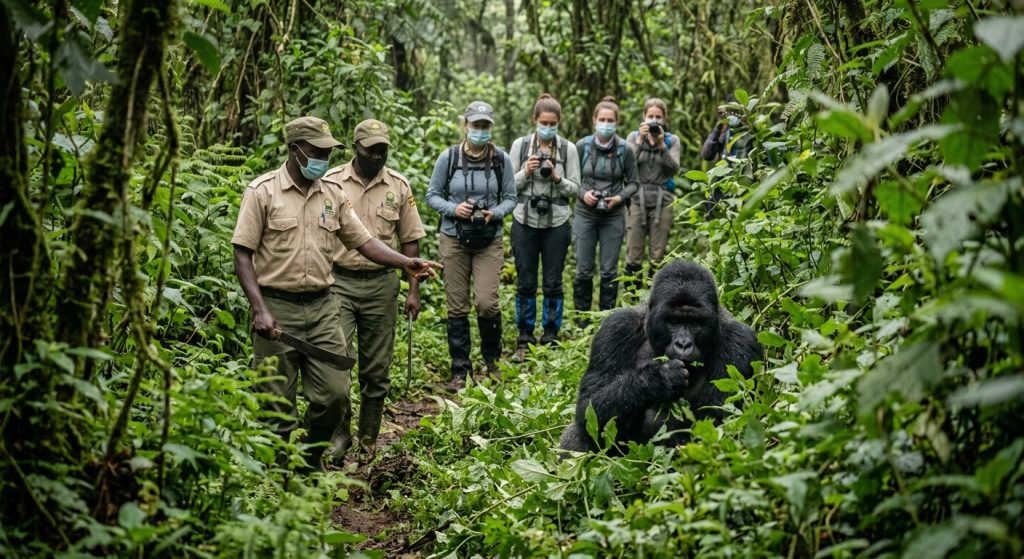
Here is the part most guides skim, and it changes your whole trip. Bwindi is split into four trekking sectors: Buhoma, Ruhija, Rushaga and Nkuringo. Each works almost like its own small park, with a separate briefing point, ranger team, gorilla families and set of nearby lodges. You cannot turn up in Buhoma holding a Rushaga permit, so pick before you pay.
Buhoma (north). The classic. This is where gorilla tourism in Uganda began, and the Mubare family was the first to be habituated here. It is widely seen as the easiest sector, and the kindest for older travelers. Good first choice if fitness is a worry.
Rushaga (south). The busiest in terms of choice. It has the largest number of habituated families of any Bwindi sector, which means more permits and more flexibility with dates. It is also the sector that offers habituation. The views toward the Virunga volcanoes are a bonus.
Ruhija (east). High, cool and misty, sitting near 2,350 metres. Lodge options are simpler and the roads are rough, so a proper 4WD is needed. Bring a warm layer, because the early mornings bite. Birders love it here.
Nkuringo (south-west). The hardest and the most dramatic. Treks can be demanding, with steep valleys and long climbs, but the views are some of the best in the park. Pick it if you are fit and want a story to tell.
One more option sits beyond Bwindi. Mgahinga Gorilla National Park, in the far south-west near the Rwandan and Congolese borders, is smaller and quieter, with one habituated family and eight permits a day. It is harder to book, but the Virunga volcano scenery is hard to beat.
Our rule of thumb: match the sector to your body and your lodge budget, not to a friend’s photos.
When to Go: Dry Season, Wet Season and the Low-Season Deal
The honest answer is that gorilla trekking runs year-round, so there is no month that guarantees a better encounter. The gorillas do not hold a calendar.
The dry months, roughly June to September and December to February, bring firmer trails and easier hiking. They also bring the biggest crowds and the highest demand for permits.
The wet months, especially April, May and November, bring mud, drizzle and fewer visitors. The new low-season permit makes them tempting. Forest trails get slick, and you will need proper boots, but the rain rarely ruins a trek. The gorillas are often easier to find when food is plentiful and they are not roaming far.
If budget matters, plan around the discount. If you hate mud, aim for the dry spells. Either way, book early.
How Hard Is It? Fitness, Terrain and Porters
UWA describes Ugandan treks as lasting anywhere from two to seven hours, and that range tells you everything. Some groups find their family within an hour. Others walk all morning, climbing and descending through dense undergrowth where there are no marked paths.
The forest is called Impenetrable for a reason. Expect steep slopes, tangled vines, slippery clay and altitude that makes short climbs feel long. You do not need to be an athlete. You do need to be comfortable walking for hours on uneven ground.
A few ways to make it easier:
- Hire a porter. Local porters carry your daypack, give you a push on steep sections and earn a fair income. It is one of the best small spends of the whole trip.
- Use a walking stick. Usually provided at the trailhead. Take one.
- Train a little. A few weeks of hill walks and stair climbing pays off more than gym sessions.
- Tell your guide your pace. Rangers can pair you with a family that is easier to reach.
The Rules You Cannot Bend
The rules are not red tape. They protect animals that share most of their DNA with us and catch our colds just as easily.
- Minimum age is 15. Children younger than 15 are not allowed to trek.
- Eight visitors per family per day. Small groups keep stress low for the gorillas.
- Stay at least seven metres away. That is about 21 feet, and the gorillas sometimes ignore it. If one walks toward you, stay calm and follow your guide.
- One hour with the family. The clock starts when you reach them.
- No trekking if you are sick. A cold that costs you a day is better than a respiratory bug that sweeps a gorilla family. Mountain gorillas are very vulnerable to human illness.
- Do not run if a gorilla charges. Crouch, avoid eye contact and let the ranger handle it.
- Take your litter home. Everything you carry in comes back out.
- Keep your voice low. Whisper near the animals, and stay quiet until you have moved well away.
No flash photography either. Switch it off before you leave the trailhead.
A Trek Day, Hour by Hour
Here is how a typical day unfolds. Details shift by sector, but the rhythm stays the same.
Before sunrise. Breakfast at your lodge, usually around 6 a.m. Your driver takes you to the trailhead, which can mean a bumpy 30 to 60 minutes on forest roads. Dress in layers.
Around 8 a.m. The briefing. Rangers explain the rules, assign you to a family and introduce your guide. Trackers have already gone ahead at dawn to find where the family slept.
The hike. You set off with your group, a lead guide, rangers and trackers. Some people are surprised to see armed rangers. They are there for protection against forest elephants and other wildlife, not for the gorillas.
The meeting. Eventually the trackers slow down. You leave sticks and bags with the porters, take your camera and step in. Then it happens. A mother grooming a baby. A juvenile somersaulting down a branch. A silverback chewing leaves with the unhurried air of a man reading the paper.
The hour. It goes quickly. Most people stop taking photos after the first ten minutes because they cannot stop watching. Do not rush it.
The walk out. The return can be easier or harder than the way in. Many groups get a certificate at the end, and some trailheads have a local dance or craft stall. Buy something. The money lands directly in the community.
Afternoon. Hot shower, big dinner, early night. You will sleep well.
What to Pack for Gorilla Trekking
Pack for a cool, wet, scratchy day. Here is a list worth following.
- Waterproof hiking boots, broken in before you arrive.
- Long trousers and long sleeves, because nettles and thorns are everywhere.
- Gardening gloves, which protect your hands when you grab vines on steep sections.
- Rain jacket or poncho, even in the dry season.
- Gaiters or trousers tucked into socks, to keep ants out.
- A small daypack with water, snacks and a packed lunch from your lodge.
- Camera with a fast lens, because the forest is dark. A phone works if you keep it ready.
- Insect repellent and sunscreen.
- Hand sanitizer, to use before you go near the animals.
- Cash for tips, for porters, rangers and trackers.
Skip the white clothes, the perfume and the large camera bag. You will thank us at the first muddy ridge.
Costs Beyond the Permit
A realistic budget goes past the permit line. Plan for:
- Accommodation. Bwindi lodges run from simple banda-style camps to luxury ridge-top retreats with views across the forest.
- Transport. Road distances from Kampala are long, so many travelers drive in two days or fly to a nearby airstrip.
- Meals and drinks at the lodge.
- Porter fees and tips.
- Extra activities, such as Batwa cultural visits, golden monkey tracking in Mgahinga or birding walks.
- Insurance and visas.
A good operator will give you a clear, itemized quote so you can see exactly where the money goes. If a price looks far below everyone else’s, ask what has been left out.
Common Mistakes First-Timers Make
Booking the trip before the permit. Flights and lodges are flexible. Permits are not. Secure the permit first.
Picking the wrong sector. A fit traveler in Buhoma may feel under-challenged. A nervous walker in Nkuringo may feel punished.
Underestimating the cold. Ruhija mornings can be chilly even when Kampala is warm.
Skipping a porter. It makes the day easier and puts income straight into a local household.
Trusting the cheapest quote. Cheap often means a dodgy permit source, a tired vehicle or hidden extras. UWA’s rules exist for a reason, and licensed operators are accountable for them.
Expecting a zoo. Gorillas do not perform. They sleep, feed and wander. That unscripted quality is the entire point.
Frequently Asked Questions
How much is a gorilla permit in Uganda? For foreign non-residents, US$800 in the high season and US$600 in the low-season months of April, May and November, per the 2026 UWA tariff. Always confirm the figure for your date.
Can I book a permit myself? Foreign non-residents are expected to book through a licensed tour operator.
How long do I get with the gorillas? One hour on a standard permit. Four hours on a habituation permit.
Can kids trek? Not under 15.
What if it rains? The trek goes ahead. Pack waterproofs and enjoy the quiet.
Is Uganda cheaper than Rwanda? Yes. The Ugandan permit costs roughly half the Rwandan price.
Ready to Meet the Gorillas?
Gorilla trekking in Uganda asks for some planning, a little grit and a decent pair of boots. In return, you get an hour that most people describe as the best of their travel lives. The earlier you lock in your permit, the more choice you have over sector, season and lodge.
At Nitah Tours and Travel, we handle the permit, the lodge, the driver and the small details that make a trip run smoothly, all from our base in Kampala. Tell us your dates and your fitness level, and we will suggest the sector and itinerary that suits you.
Have you got a trek planned, or are you still deciding between Uganda and Rwanda? Drop your question in the comments and we will answer it.
Comment 01
Leonore,
10 October, 2026This paragraph will help the internet users for building
up new weblog or even a weblog from start to end.